Agrido Expound International Limited
Phone: +255 652 924 522
Email: info@agridoexpound.com

Food Science Jobs Tanzania 2026: Complete Guide to Germany Food Technology Program
The global food industry is experiencing a significant transformation, and Germany stands at the forefront of food technology innovation. As the demand for processed foods, meat products, and advanced food production techniques continues to rise, Germany faces a critical shortage of skilled professionals in this sector. This shortage has created remarkable opportunities for individuals searching for Food Science Jobs in Tanzania 2026, especially graduates and professionals who want to build successful international careers in Europe’s growing food industry.
Germany’s food processing and meat production industries are actively recruiting international workers to fill positions that cannot be staffed locally. The country’s aging workforce, expanding food manufacturing sector, and increasing demand for high-quality food products have created excellent opportunities for applicants seeking Food Technology Jobs Tanzania, Food Production Jobs Tanzania, Food Processing Jobs Germany, and Germany Jobs for Tanzanians. For Food Science graduates, Food Technology professionals, Agriculture graduates, and Meat Processing experts in Tanzania, this represents a gateway to world-class careers, professional development, and valuable international work experience.
The Germany Food Technology Program provides a structured pathway for qualified professionals and motivated job seekers to access employment opportunities in Germany’s food industry. Through trusted recruitment partners such as Agrido Expound, applicants can receive guidance throughout the recruitment and application process. Whether you are interested in Food Factory Jobs Germany, Meat Processing Jobs Germany, Food Science Graduate Jobs, or other Jobs Abroad for Tanzanians, this opportunity can help you gain practical experience while building a long-term career in one of Europe’s leading food production sectors.
This comprehensive guide explores everything you need to know about Food Science Jobs in Tanzania 2026, including eligibility requirements, required documents, available positions, application procedures, employee benefits, and practical tips to improve your chances of success. If your goal is to work in Germany through the Germany Food Technology Program or pursue International Food Technology Jobs, this guide will provide the information you need to begin your journey with confidence.
About the Germany Food Technology Program
What Is the Germany Food Technology Program?
The Germany Food Science Program is a structured initiative designed to recruit skilled international professionals for Germany’s thriving food processing and production industries. This program connects qualified candidates from countries like Tanzania with German employers who face significant labor shortages in food production, meat processing, and related sectors.
The program focuses on matching the technical expertise and educational backgrounds of Food Science and Food Technology graduates with the practical needs of German food manufacturing companies. It encompasses various roles across the production chain, from raw material handling to quality control and packaging.
Why German Companies Recruit International Workers
Germany’s food industry faces unprecedented challenges in workforce recruitment. The country’s aging population means that a substantial portion of the current workforce is approaching retirement age, while younger Germans increasingly pursue careers in other sectors. This demographic shift has created a skills gap that local educational institutions cannot fill quickly enough.
Additionally, the demand for high-quality food products continues to grow both domestically and for export. German food manufacturers must maintain production levels while adhering to stringent quality standards, requiring skilled professionals who understand modern food technology principles. International recruitment has become essential to maintain productivity and continue innovation in the sector.
Industries Involved
The Germany Food Technology Program encompasses several interconnected industries:
Meat Processing: This is currently the sector experiencing the most acute labor shortages in Germany. The 2025 analysis from the Competence Center for Securing Skilled Workers (KOFA) revealed that an average of 4,665 positions for meat processing professionals could not be filled, representing a 40% increase from the previous year. This shortage stems from demographic changes, with over one-third of meat processing workers being over 55 years old and approaching retirement.
Food Production: German food manufacturers produce everything from baked goods and dairy products to ready-to-eat meals and specialty foods. These facilities require skilled production workers who can operate modern machinery, maintain food safety standards, and ensure consistent product quality.
Food Technology and Innovation: Germany invests heavily in food science research and development. Companies seek professionals who can contribute to product development, process optimization, and quality improvement initiatives.
Packaging and Logistics: Efficient packaging is crucial for food safety and shelf life. Food packaging workers ensure products are properly sealed, labeled, and prepared for distribution.
Career Opportunities Available
The program offers diverse career paths across the food industry spectrum. Successful candidates can build long-term careers with opportunities for advancement, specialized training, and professional certification. Many German companies offer apprenticeships and structured training programs that combine practical work experience with formal education.
German employers value international experience and cultural diversity in their workforce. Tanzanian professionals who participate in this program gain exposure to European food production standards, German work culture, and advanced manufacturing technologies. This experience is highly portable and enhances career prospects both in Germany and upon potential return to East Africa.
Available Job Opportunities
Pork Meat Production Worker
Role Overview: Pork meat production workers are essential to Germany’s meat processing industry. These professionals handle various aspects of meat processing, from receiving raw materials to preparing finished products for distribution. The shortage of meat processing professionals in Germany has reached unprecedented levels, making this an area of critical need.
Workplace Environment: Pork meat production facilities are typically large-scale industrial operations that follow strict hygiene and safety protocols. Workers operate in temperature-controlled environments designed to maintain meat quality and prevent contamination. Modern facilities incorporate advanced machinery for processing, cutting, and packaging.
Key Duties:
-
Receiving and inspecting incoming raw meat products
-
Operating processing machinery for cutting and portioning
-
Following precise production specifications and recipes
-
Maintaining sanitary conditions in work areas
-
Supporting packaging operations
-
Adhering to food safety and quality standards
Required Skills: Successful pork meat production workers demonstrate physical stamina for standing and repetitive tasks, attention to detail, and the ability to work efficiently in a team environment. Basic understanding of food hygiene principles is essential, and experience in meat processing or related industries is advantageous.
Career Growth: Entry-level production workers can advance to supervisory roles, quality control positions, or specialized processing positions. Many German companies offer structured training programs that lead to formal certifications in food processing and meat technology.
Food Technology Assistant
Role Overview: Food technology assistants support food scientists and technologists in developing and improving food products. This role appeals to Food Science and Food Technology graduates who want to apply their academic knowledge in a practical production environment.
Workplace Environment: Food technology assistants work in a combination of laboratory settings, test kitchens, and production facilities. They collaborate with quality assurance teams, production managers, and research departments to ensure products meet specifications and quality standards.
Key Duties:
-
Assisting in product development and recipe testing
-
Conducting quality checks on raw materials and finished products
-
Monitoring production processes for quality assurance
-
Documenting test results and production data
-
Supporting food safety audits and compliance activities
-
Collaborating with production teams on process improvements
Required Skills: Strong understanding of food science principles, laboratory skills, attention to detail, and proficiency in documentation. Graduates should have foundational knowledge of food chemistry, microbiology, and food processing technologies.
Career Growth: Food technology assistants can progress to food technologist roles, quality assurance management, or research and development positions. The experience gained in Germany’s advanced food industry is globally recognized and highly valued.
Food Production Worker
Role Overview: Food production workers form the backbone of Germany’s food manufacturing industry. These professionals operate machinery, monitor production lines, and ensure products are manufactured according to specifications. Production workers are needed across all food sectors, from baked goods and confectionery to ready meals and beverages.
Workplace Environment: Production facilities range from modern, highly automated plants to more traditional operations requiring manual handling. Most facilities maintain rigorous hygiene standards and operate on shift schedules to maximize production efficiency.
Key Duties:
-
Operating and monitoring food production machinery
-
Following production schedules and recipes
-
Inspecting products for quality compliance
-
Maintaining clean and sanitized work areas
-
Reporting equipment issues and production concerns
-
Participating in continuous improvement initiatives
Required Skills: Mechanical aptitude, ability to follow detailed procedures, physical stamina, and teamwork skills. Experience in manufacturing environments is beneficial but not always required as companies provide comprehensive training.
Career Growth: Food production workers can advance to team leader positions, specialized machinery operators, or shift supervisors. Many companies offer cross-training opportunities that broaden workers’ skills and career options.
Food Factory Worker
Role Overview: Food production workers form the backbone of Germany’s food manufacturing industry. These professionals operate machinery, monitor production lines, and ensure products are manufactured according to specifications. Production workers are needed across all food sectors, from baked goods and confectionery to ready meals and beverages.
Workplace Environment: Production facilities range from modern, highly automated plants to more traditional operations requiring manual handling. Most facilities maintain rigorous hygiene standards and operate on shift schedules to maximize production efficiency.
Key Duties:
-
Operating and monitoring food production machinery
-
Following production schedules and recipes
-
Inspecting products for quality compliance
-
Maintaining clean and sanitized work areas
-
Reporting equipment issues and production concerns
-
Participating in continuous improvement initiatives
Required Skills: Mechanical aptitude, ability to follow detailed procedures, physical stamina, and teamwork skills. Experience in manufacturing environments is beneficial but not always required as companies provide comprehensive training.
Career Growth: Food production workers can advance to team leader positions, specialized machinery operators, or shift supervisors. Many companies offer cross-training opportunities that broaden workers’ skills and career options.
Food Packaging Worker
Role Overview: Food packaging workers ensure products are properly packaged to maintain freshness, safety, and shelf appeal. This role is crucial for food safety, as proper packaging prevents contamination and extends product shelf life.
Workplace Environment: Packaging operations typically occur in dedicated areas within food production facilities. The environment is clean, organized, and follows food safety standards. Workers use packaging machinery and manual techniques to prepare products for distribution.
Key Duties:
-
Operating packaging machinery and equipment
-
Inspecting packages for quality and proper sealing
-
Applying labels and product information
-
Monitoring packaging supplies and inventory
-
Maintaining cleanliness of packaging areas
-
Participating in quality checks and inspections
Required Skills: Attention to detail, manual dexterity, ability to work quickly and accurately, and understanding of packaging quality standards. Experience with packaging equipment is beneficial but training is provided.
Career Growth: Packaging workers can advance to packaging line supervision, quality control roles, or materials management positions. Specialized training in packaging technology can lead to technical roles with higher responsibility.
Production Line Operator
Role Overview: Production line operators monitor and control automated food processing equipment. These professionals ensure production lines run efficiently, products meet specifications, and issues are promptly addressed. This role requires technical understanding of food processing equipment and production processes.
Workplace Environment: Production operators work on factory floors, monitoring control panels, observing machinery, and coordinating with team members. Modern food processing facilities use sophisticated automation that operators must understand and manage effectively.
Key Duties:
-
Monitoring production line equipment and processes
-
Adjusting machine settings for optimal performance
-
Inspecting products for quality compliance
-
Troubleshooting minor equipment issues
-
Maintaining production records
-
Ensuring safety procedures are followed
Required Skills: Technical aptitude, mechanical understanding, problem-solving abilities, and attention to detail. Experience with manufacturing equipment or mechanical trades is valuable.
Career Growth: Production line operators can advance to senior operator positions, maintenance technician roles, or production supervision. Additional technical training can lead to specialist positions in automation or process control.
Quality Control Assistant
Role Overview: Quality control assistants play a vital role in ensuring food products meet German and European standards. These professionals perform inspections, conduct tests, and document quality data to maintain the high standards expected in German food production.
Workplace Environment: Quality control assistants split their time between production areas, quality control laboratories, and documentation offices. They interact with production teams, suppliers, and quality management personnel.
Key Duties:
-
Performing quality inspections on raw materials
-
Conducting product testing and sample analysis
-
Documenting quality control data and findings
-
Supporting food safety audits and inspections
-
Identifying quality issues and recommending solutions
-
Ensuring compliance with food safety regulations
Required Skills: Understanding of food quality standards, attention to detail, analytical skills, and proficiency with documentation. Knowledge of HACCP principles and food safety systems is essential for success in this role.
Career Growth: Quality control assistants can progress to quality assurance specialists, food safety managers, or compliance officers. The experience gained in Germany’s rigorous quality control systems is globally recognized and highly valued.
Candidate Requirements
Male Candidates
Some German food processing and meat production positions specify male candidates due to the physical nature of the work or industry-specific needs. This requirement reflects the specific demands of certain roles and should not be interpreted as a general policy across all positions.
Rationale: The pork meat production and food processing industries often involve physically demanding tasks, including heavy lifting, standing for extended periods, and operating large equipment. Some employers may prefer male candidates for positions where physical strength is a primary requirement.
Consideration: Eligibility requirements vary by employer and position. While some positions specify gender preferences based on job requirements, many roles in food technology and production are open to all qualified candidates regardless of gender. Candidates should confirm specific requirements for individual positions.
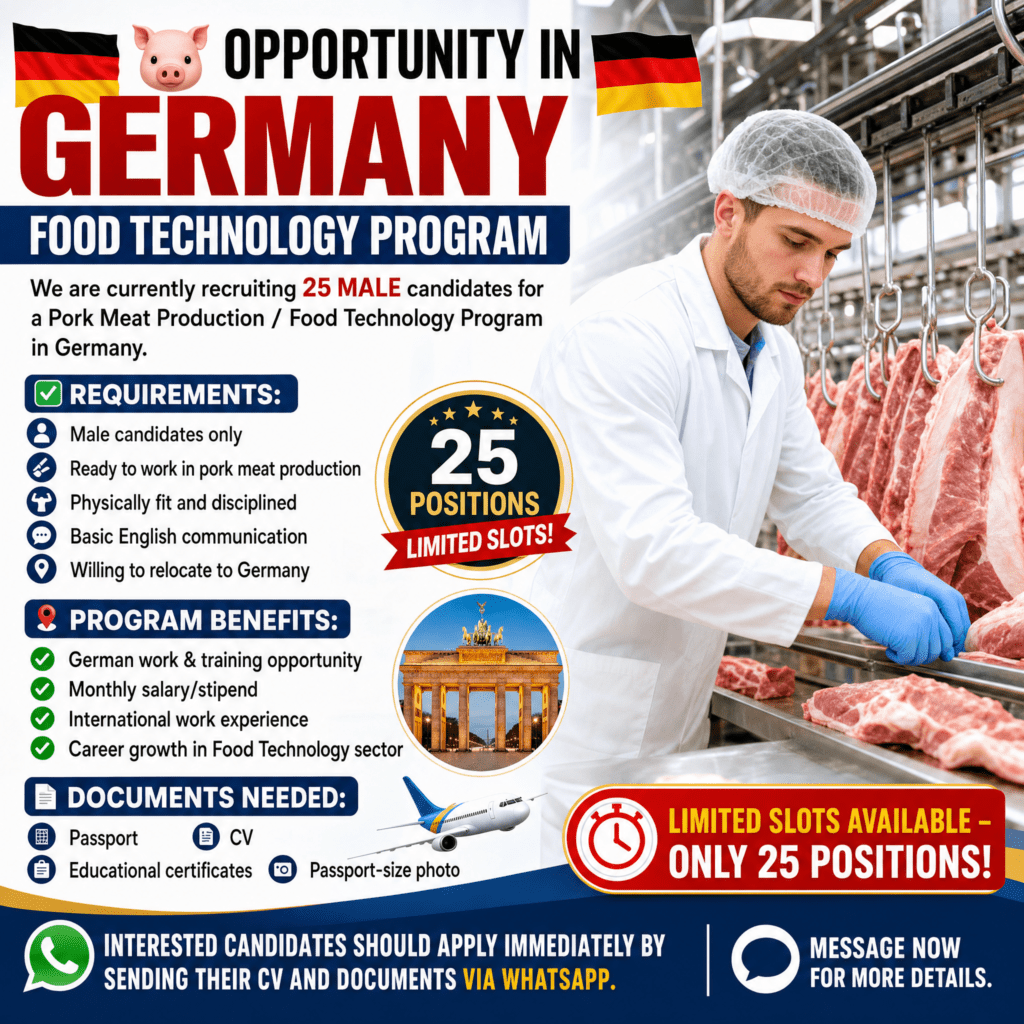
Ready to Work in Pork Meat Production
Willingness to work in pork meat production is essential for positions in Germany’s meat processing industry. This requirement acknowledges that many available opportunities are specifically in the pork sector, which faces the most severe labor shortages.
Importance: Germany’s meat processing industry relies heavily on pork production, with many positions requiring direct handling of pork products. Candidates must be comfortable with meat processing work and willing to adhere to strict hygiene and safety protocols.
Training Provided: Employers provide comprehensive training on safety procedures, hygiene requirements, and operational processes. No prior meat processing experience is required, but candidates should be open to learning and following established procedures.
Physically Fit
Physical fitness is crucial for success in food production roles. Most positions involve standing for long periods, performing repetitive tasks, and occasionally lifting heavy items. Candidates should be physically capable of meeting the demands of production work.
Importance: Food processing facilities operate on production schedules that require workers to maintain consistent output throughout their shifts. Physical stamina ensures workers can perform effectively and safely over extended periods.
Health Considerations: Candidates should be in good general health with no conditions that would prevent them from performing production tasks. Some positions may require the ability to lift up to 25 kilograms or more, depending on the role.
Disciplined
Discipline and reliability are highly valued in German work culture. Production operations depend on workers following procedures precisely, maintaining attendance, and contributing positively to team performance.
Importance: Food production requires strict adherence to safety protocols, hygiene standards, and quality procedures. Disciplined workers who consistently follow guidelines contribute to product quality and workplace safety.
Professional Expectations: Disciplined employees demonstrate punctuality, reliability, and commitment to continuous improvement. German employers value workers who take initiative, show responsibility, and maintain high professional standards.
Basic English Communication
Basic English communication skills are essential for international candidates working in Germany. While many German companies operate primarily in German, English serves as a common language for international teams and documentation.
Importance: Basic English enables workers to understand safety instructions, production procedures, and team communications. Many companies provide training materials and documentation in English to support international workers.
Communication Requirements: Candidates should be able to understand basic instructions, ask clarifying questions, and communicate effectively with supervisors and colleagues. While advanced English is not required for entry-level positions, willingness to improve language skills is beneficial.
German Language: While not always required for initial recruitment, learning German significantly enhances integration and long-term career prospects in Germany. Some positions may require basic German language skills, and many employers support language training for international workers.
Willing to Relocate to Germany
Relocation is a significant life decision that requires careful consideration and preparation. Candidates must be genuinely committed to moving to Germany for work and ready to adapt to a new culture, environment, and way of life.
Importance: Successful relocation depends on candidates being prepared for the cultural, social, and practical aspects of living in Germany. Employers look for candidates who demonstrate genuine commitment to building a career in Germany.
Practical Preparation: Relocation involves arranging housing, understanding German social systems, adjusting to a new work culture, and potentially learning a new language. Candidates should research these aspects and prepare accordingly.
Long-term Perspective: While positions may start as temporary or contract roles, many workers transition to permanent employment and build long-term careers in Germany. The Germany Food Technology Program offers pathways to permanent residence for qualified professionals who establish themselves in the workforce.
Program Benefits
German Work Opportunity
The Germany Food Technology Program provides access to Europe’s largest economy and one of the world’s most advanced food production industries. Working in Germany offers exposure to cutting-edge technology, rigorous quality standards, and professional practices that enhance career development.
Industry Exposure: Germany’s food industry is renowned for its innovation, efficiency, and quality. Workers gain practical experience in facilities that combine traditional craftsmanship with modern technology. This experience builds valuable skills that are transferable to food industries worldwide.
Career Development: The German work environment emphasizes professional development, continuous learning, and career progression. Employers support workers who demonstrate initiative and commitment, offering advancement opportunities as skills develop.
Professional Training
German companies invest heavily in workforce training and development. International workers receive comprehensive training that covers safety procedures, operational processes, quality standards, and professional skills.
Structured Programs: Many companies offer formal training programs that combine practical work experience with theoretical education. These programs may lead to recognized certifications that enhance career prospects both in Germany and internationally.
Skills Development: Training focuses on developing practical skills that are directly applicable to food production roles. Workers learn to operate specialized equipment, follow quality control procedures, and maintain safety standards.
International Work Experience
Working in Germany provides unparalleled international experience that enhances professional profiles and career opportunities. This experience demonstrates adaptability, cross-cultural competence, and exposure to world-class industry practices.
Global Recognition: German work experience is recognized and respected worldwide. Professionals who have worked in Germany’s food industry bring valuable perspectives and skills to employers in other countries.
Professional Network: Working in Germany builds an international professional network that can support career development for years to come. Connections made with colleagues, supervisors, and industry professionals create opportunities for future collaborations.
Career Growth
The Germany Food Technology Program offers clear pathways for career advancement. Entry-level positions serve as foundations for building long-term careers in the food industry, with opportunities for promotion and specialization.
Advancement Pathways: Workers can progress from entry-level roles to supervisory positions, specialized technical roles, and management positions. Many German companies prefer to promote from within, rewarding loyalty and demonstrated performance.
Specialization: Workers can develop specialized expertise in areas such as quality assurance, process optimization, food safety, or production management. Specialization enhances career prospects and earning potential.
Workplace Safety
Germany maintains rigorous workplace safety standards that protect workers’ health and wellbeing. German companies are legally obligated to maintain safe working environments and provide appropriate safety equipment and training.
Safety Standards: German occupational health and safety regulations are among the strictest in the world. Workers benefit from environments designed to minimize risks and protect employee health.
Health Protection: Employers provide personal protective equipment, safety training, and regular health checks. Workers have access to healthcare through Germany’s comprehensive social security system.
Professional Development
Employers support ongoing professional development through training, education opportunities, and skill enhancement programs. Workers who invest in their development can access better positions and higher earnings over time.
Continuing Education: Many companies support workers who pursue additional education or professional certifications. This support may include financial assistance, time off for study, or in-house training programs.
Skills Enhancement: Workers can develop new skills through cross-training, mentorship programs, and practical experience. Skills enhancement increases job satisfaction and career mobility.
Employee Protection
German labor laws provide strong protections for workers. International employees enjoy the same rights and protections as German workers, including fair wages, reasonable working hours, paid leave, and social security benefits.
Legal Rights: Workers have legal rights to fair treatment, safe working conditions, and protection from discrimination. German labor courts enforce these rights, ensuring workers can access justice when needed.
Social Security: Workers participate in Germany’s comprehensive social security system, which includes health insurance, pension contributions, unemployment benefits, and other protections. These benefits provide security for workers and their families.
Required Documents
Passport
A valid passport is essential for international travel and work authorization. Candidates must ensure their passports meet German visa and immigration requirements.
Requirements: Passports must be valid for at least six months beyond the intended stay in Germany. The passport should have sufficient blank pages for visa stamps and residence permits.
Preparation: Candidates should check passport validity well before applying and renew if necessary. Applying for a new passport can take several weeks, so early preparation is advised.
CV
A well-prepared CV is crucial for successful applications. German employers expect clear, professional CVs that highlight qualifications, experience, and relevant skills.
Format: CVs should follow a clear, professional format with sections covering personal information, education, work experience, skills, and references. The European standard Europass format is widely accepted and recommended.
Content: Include details of all relevant qualifications, work experience (including internships), language skills, technical competencies, and any other relevant information. Highlighting achievements and responsibilities in previous roles strengthens the CV.
Preparation: Tailor the CV to the specific position and company. Emphasize skills and experience relevant to food production, food technology, or meat processing. Having the CV professionally reviewed can improve its effectiveness.
Educational Certificates
Educational certificates verify qualifications and are required for German visa applications. German authorities must recognize these certificates through established procedures.
Required Documents: Submit original certificates or certified copies for all relevant qualifications. This includes Bachelor’s degrees, diplomas, professional certifications, and any other relevant credentials.
Recognition: Germany has established processes for recognizing foreign qualifications. Candidates should check whether their qualifications are recognized in Germany through the “Recognition in Germany” website. Some positions may require additional certification or assessment.
Translation: Non-German documents must be translated into German by a certified translator. The German Embassy provides guidance on acceptable translations and document requirements.
Passport-Size Photographs
Recent biometric photographs are required for visa applications and work permits. These photographs must meet specific technical requirements.
Requirements: Photos should be recent (taken within the last six months), biometric (meeting specific size and formatting standards), and suitable for official documents. The German Embassy provides detailed photo specifications.
Preparation: Have professional biometric photographs taken at a studio familiar with visa requirements. Keep multiple copies available for various applications and documents.
Step-by-Step Application Process
Finding Legitimate Opportunities
The first step is identifying legitimate opportunities through reputable channels. Working with established recruitment agencies like Agrido Expound ensures access to verified positions and proper application procedures.
Research: Start by researching German food industry opportunities and the companies that employ international workers. The recruitment landscape is evolving, with the Germany Opportunity Card providing new pathways for skilled professionals.
Verification: Verify the legitimacy of opportunities and recruiters. The German Embassy provides information on visas for skilled workers and can help verify employer legitimacy. Be wary of opportunities that seem too good to be true or require payment for applications.
Preparing a CV
A professional CV is the foundation of a successful application. German employers value clear, well-organized CVs that present qualifications and experience effectively.
Content Strategy: Organize the CV to highlight relevant qualifications and experience first. List education, including Food Science or Food Technology degrees, professional experience in food production or processing, and relevant skills such as food safety knowledge or technical competencies.
Format: Follow German CV expectations, which typically include a professional photo (optional but common), personal details, chronological work history, and clear sections for education and skills. The Europass format is widely accepted in Europe.
Translation: Having the CV translated into German demonstrates commitment and makes it accessible to German-speaking hiring managers. Professional translation services ensure accuracy and appropriate terminology.
Applying
Application procedures vary by employer and position. Following instructions carefully and submitting complete applications increases the chances of success.
Online Applications: Many German employers use online application systems. Complete all required fields, upload documents in accepted formats, and submit before deadlines.
Email Applications: Some positions accept applications via email. Follow any specific instructions regarding file formats, naming conventions, and subject lines. Include a professional cover letter that explains interest and qualifications.
Follow-up: Following up after submitting an application can demonstrate interest and professionalism. However, respect the employer’s timeline and avoid overly frequent inquiries.
Employer Interview
Interviewing for international positions requires preparation and cultural awareness. German employers value professionalism, clear communication, and demonstrated qualifications.
Preparation: Research the company, understand the position’s requirements, and prepare to discuss relevant experience and skills. Practice answering common interview questions about qualifications, experience, and motivation.
Cultural Considerations: German professional culture values punctuality, direct communication, and well-prepared candidates. Dress professionally, arrive early for scheduled interviews, and be prepared to discuss specific details of experience and education.
Communication: For candidates whose primary language is not German, basic English is usually sufficient. Candidates who speak German or are learning it demonstrate commitment to integration.
Receiving a Job Offer
Receiving a formal job offer is an exciting milestone that begins the visa and relocation process. Review the offer carefully before accepting.
Offer Review: Understand the terms of employment, including work hours, compensation, training provisions, and any conditions. Clarify questions about accommodation, relocation support, and onboarding processes.
Acceptance: Provide formal acceptance in writing according to the employer’s instructions. This acceptance is required for visa processing and begins the formal employment arrangement.
Work Visa Process
The visa process is a critical stage that requires careful preparation and patience. Working with the German Embassy in Tanzania ensures compliance with all requirements.
Visa Types: The Skilled Worker Visa is the typical pathway for food production positions. Some positions may be eligible for the EU Blue Card or other visa categories. The Germany Opportunity Card offers another pathway for job seekers.
Application Preparation: Gather all required documents, including the job offer, educational certificates (with translations and recognition), passport, and other supporting materials. The German Embassy provides detailed checklists.
Processing Timeline: Visa processing typically takes 3 months but can be longer. Apply well in advance of the intended start date and avoid booking travel until the visa is approved.
Preparing for Travel
Once the visa is approved, prepare for travel and relocation to Germany. Good preparation ensures a smooth transition and successful start in the new position.
Accommodation: Arrange housing before departure. Some employers provide accommodation support or temporary housing. Research housing options in the area and consider short-term arrangements initially.
Finances: Ensure adequate funds for initial expenses, including accommodation deposits and living costs before the first paycheck. The blocked account requirement (Sperrkonto) ensures funds are available for living expenses.
Cultural Preparation: Learning German basics, understanding German work culture, and preparing for the cultural adjustment helps ensure a successful transition. Many resources are available online and through the embassy.
Arriving in Germany
Upon arrival, complete necessary registrations and start the onboarding process. This stage begins the practical experience of working and living in Germany.
Registration: Complete registration at local authorities, including registration of address (Anmeldung) and work permit processes. These registrations are necessary for accessing services and receiving pay.
Onboarding: German companies provide comprehensive onboarding to help new workers integrate quickly. This includes training, orientation, and introductions to team members.
Integration: Building social connections, joining community activities, and continuing language learning helps new workers adapt to life in Germany. Many companies provide integration support for international workers.
Why Food Science Graduates from Tanzania Have Good Opportunities
Strong Educational Foundation
Tanzanian Food Science and Food Technology programs provide solid educational foundations that align with international industry needs. Graduates possess knowledge of food chemistry, microbiology, processing, and quality control that is applicable to German production environments.
Technical Skills
Graduates develop technical skills that are directly relevant to food production roles. These include laboratory techniques, quality control procedures, processing knowledge, and food safety principles. Technical skills are highly valued in German production environments.
Adaptability
Tanzanian professionals often demonstrate adaptability and willingness to learn new processes and technologies. This adaptability is valuable in German production environments that require flexibility and continuous improvement.
International Motivation
Tanzanian professionals seeking international opportunities demonstrate motivation and ambition that employers value. International experience builds skills and perspectives that benefit both the employer and the professional’s career development.
English Proficiency
Many Tanzanian professionals have strong English skills, facilitating communication in international teams. While German language skills are valuable, English proficiency enables effective participation in international work environments.
Cultural Diversity
International workers bring cultural diversity that enriches workplaces and contributes to innovation. German employers increasingly value diverse perspectives that enhance problem-solving and creativity.
Professional Ambition
Tanzanian professionals seeking career advancement and international experience demonstrate ambition that employers value. This motivation supports career development and professional growth.
Work Ethic
Tanzanian professionals often demonstrate strong work ethics, reliability, and commitment to quality. These values align with German work culture and are highly valued by employers.
Food Industry Experience
Tanzania’s growing food industry provides practical experience relevant to German production environments. Professionals with experience in food production, quality control, or related fields bring valuable practical knowledge.
Commitment to Professional Development
Tanzanian professionals seeking international opportunities show commitment to professional development and career advancement. This commitment is valued by employers who invest in workforce development.
Common Mistakes Applicants Should Avoid
Strong Educational Foundation
Tanzanian Food Science and Food Technology programs provide solid educational foundations that align with international industry needs. Graduates possess knowledge of food chemistry, microbiology, processing, and quality control that is applicable to German production environments.
Technical Skills
Graduates develop technical skills that are directly relevant to food production roles. These include laboratory techniques, quality control procedures, processing knowledge, and food safety principles. Technical skills are highly valued in German production environments.
Adaptability
Tanzanian professionals often demonstrate adaptability and willingness to learn new processes and technologies. This adaptability is valuable in German production environments that require flexibility and continuous improvement.
International Motivation
Tanzanian professionals seeking international opportunities demonstrate motivation and ambition that employers value. International experience builds skills and perspectives that benefit both the employer and the professional’s career development.
English Proficiency
Many Tanzanian professionals have strong English skills, facilitating communication in international teams. While German language skills are valuable, English proficiency enables effective participation in international work environments.
Cultural Diversity
International workers bring cultural diversity that enriches workplaces and contributes to innovation. German employers increasingly value diverse perspectives that enhance problem-solving and creativity.
Professional Ambition
Tanzanian professionals seeking career advancement and international experience demonstrate ambition that employers value. This motivation supports career development and professional growth.
Work Ethic
Tanzanian professionals often demonstrate strong work ethics, reliability, and commitment to quality. These values align with German work culture and are highly valued by employers.
Food Industry Experience
Tanzania’s growing food industry provides practical experience relevant to German production environments. Professionals with experience in food production, quality control, or related fields bring valuable practical knowledge.
Commitment to Professional Development
Tanzanian professionals seeking international opportunities show commitment to professional development and career advancement. This commitment is valued by employers who invest in workforce development.
Need More Information?
Have questions about eligibility, required documents, or the application process? Contact our recruitment team today for professional guidance and support.
Frequently Asked Questions
1. What qualifications are needed for Food Science Jobs Tanzania 2026 in Germany?
For Food Science Jobs Tanzania 2026, candidates generally need a Bachelor’s degree in Food Science, Food Technology, Agriculture, or a related field. Some entry-level positions may accept relevant experience in food production or meat processing. German employers also value practical skills, food safety knowledge, and basic English communication.
2. How can Tanzanian Food Technology graduates find jobs in Germany?
Tanzanian Food Technology graduates can find jobs in Germany through recruitment agencies specializing in international placements, direct applications to German companies, and programs like the Germany Food Technology Program. Working with legitimate agencies like Agrido Expound increases access to verified opportunities.
3. What is the Germany Food Technology Program?
The Germany Food Technology Program connects international professionals with German employers in food production and processing industries. The program offers structured pathways to employment, with positions ranging from entry-level production workers to technical roles requiring Food Science or Food Technology qualifications. The program addresses Germany’s labor shortages while providing career opportunities for international candidates.
4. Are Food Processing Jobs Germany suitable for recent graduates?
Yes, Food Processing Jobs Germany often welcome recent graduates who demonstrate relevant qualifications and willingness to learn. Many German employers provide comprehensive training that helps recent graduates transition from academic knowledge to practical production skills.
5. Do Food Production Jobs Tanzania graduates qualify for German positions?
Food Production Jobs Tanzania graduates with relevant qualifications and experience can qualify for German positions. Academic qualifications in Food Science, Food Technology, and Agriculture are recognized, though specific positions may require additional assessment or certification.
The Germany Food Technology Program offers exceptional opportunities for Food Science graduates, Food Technology graduates, Agriculture graduates, and Meat Processing professionals from Tanzania and East Africa. Germany’s food industry is actively recruiting international workers to address critical labor shortages and maintain production capacity.
The program provides structured pathways to professional careers with German work opportunities, professional training, international experience, career growth, workplace safety, and strong employee protections. These positions represent more than jobs—they are gateways to professional development, cultural exchange, and international career advancement.
For Tanzanian professionals, these opportunities align with growing career ambitions and the desire for international experience. The qualifications and skills developed through Tanzanian Food Science and Food Technology programs provide strong foundations for success in German production environments. With proper preparation, documentation, and professional guidance, candidates can navigate the application process successfully.
The key to success is early preparation, thorough documentation, and working with legitimate recruitment partners. Starting early, understanding requirements, and following procedures carefully increases the chances of securing positions and making successful transitions to German employment.
Are you ready to advance your career with Food Science Jobs Tanzania 2026 opportunities in Germany’s thriving food technology sector? The Germany Food Technology Program is actively recruiting qualified Food Science and Food Technology graduates for positions that offer professional development, international experience, and exceptional career opportunities.
Don’t miss this opportunity to build your international career.
Contact Agrido Expound today for professional guidance on:
-
Understanding the Germany Food Technology Program requirements
-
Preparing competitive applications
-
Document verification and translation
-
Interview preparation
-
Visa processing
-
Travel and relocation planning
Agrido Expound specializes in connecting Tanzanian and East African professionals with international opportunities in food technology and production. Our experienced team provides comprehensive support throughout the application process, helping you navigate requirements and secure positions that match your qualifications and career goals.
Take the first step toward your German career.
Reach out to Agrido Expound now to schedule a consultation and begin your journey toward Food Science Jobs Tanzania 2026 opportunities in Germany’s food industry.
Your international career awaits. Contact Agrido Expound for professional guidance and support throughout your application journey.